Sunday, March 20, 2022

The (hopeful) barren fig tree


Texts: Isaiah 55: 1-9Luke 13: 1-9

Sermon at Congregational United Church of Christ in Mineral Point, Wis.


The Jewish prophet Isaiah invites us to come to the water, to listen that we might live.

The Jewish rabbi we call Jesus tells a story about a fig tree in desperate need of water and other nourishment to live.


And what about us? What does the story of the barren fig tree have to say to us? 


Fig trees are probably not our biggest concern these days. 
There’s the lingering pandemic. 
There’s inflation – especially if you need to put gas in your car. 
There’s that war in Ukraine.


And then there’s our own nagging sense that sometimes we are like the fig tree – not quite thriving, maybe taking up space where we have no use. 


Let’s see if we can make some sense out of these stories that people have grappled with across the centuries. Let’s see if they can offer us hope in the midst of our pretty tumultuous world.


The easy one is the reading from Isaiah. The Jewish people have been in exile, forced away from their homeland by a conquering army. You might think of them like the more than three million Ukrainians who have fled from their nation in the last few weeks. 


Isaiah tells his people – and the people of our day – “You’ll summon nations you’ve never heard of, and nations who’ve never heard of you will come running to you because of me, your God, who has honored you.”


God is with you, even in your troubles, Isaiah says. People will arrive to help. So come to the waters, take the bread and wine and milk being offered to you, seek the Lord.


OK – I can understand all that. 


But then along comes Jesus talking about Galileans being murdered, workers being killed in an accident, a fig tree not producing any figs – and then leaving us all in suspense about whether the fig tree will live or die.


That’s harder to understand. But I think in the midst of it all, there is a message of hope for each one of us. 


It’s not just that God will give us another chance like the owner of the vineyard did for the tree. It’s that we have value to God on our good days and on our bad days. 


It’s that for all the troubles around us – whether in the world or in our own lives – there’s always a chance for growth. 


There’s the message that we are worthy and that God loves us, just as God loved the people in exile in Isaiah’s time, just as God loves the refugees in our time, just as God loves each one of us here this morning.


That story that Jesus tells at the beginning of the Gospel reading is a bit grisly: “Some present who told him about the Galileans whose blood Pilate had mingled with their sacrifices.”


What was that about?

We don’t know for sure. That story appears nowhere else in the Bible or in any ancient histories. It suggests that the Romans attacked some Jews from the northern area called Galilee – Jesus’ home area – in the Temple while they were there to offer sacrifices and their blood flowed right into what they were offering as sacrifices. 


It’s a vivid, horrific image of the brutality of Rome – not unlike the vivid, horrific images we are seeing right now out of Ukraine and that we have seen from so many other lands over the years – from Iraq, from Rwanda, from Yemen, from Syria, from Ethiopia, from Vietnam. 


Then there is the tower that collapsed, killing the workers. The common wisdom was that people who died in these situations must have been sinners who God was punishing. 


No way, says Jesus. Each one of us has shortcomings in our lives. God does not strike us down for those. Maybe the tower collapsed because of careless oversight by those who wanted it built. Industrial accidents are not just a new phenomenon.


But then we get to the fig tree.


Why a fig tree?

Well, it was an extraordinarily common tree in Jesus’ time, in this land of Israel. It was one of the first plants cultivated by humans, shaping the world of agriculture nearly 1,000 years before the planting of things like wheat and rye.


It makes other appearances in the Bible. 


In the beautiful love poem known as the Song of Songs, the man says to the woman, “The green fig forms on the fig tree, the vines in blossom give off fragrance. Arise, my darling, my fair one, come away!”


The prophet Micah wrote: “Nation shall not lift up sword against nation, neither shall they learn war any more; but they shall all sit under their own fig trees, and no one shall make them afraid.”


So you can see why there were high expectations for the fig tree in Jesus’ story. And yet, it was barren. There was no fruit. It was taking up valuable space in the owner’s vineyard. Clearly, the wisest thing to do would be to cut it down.


“Wait!” says the gardener. “Give it another year.”

But this is not just a wait-and-see proposition. The gardener says he will tend the tree, mulch it, put manure around it.


Here’s the thing. Fig trees do well in dry climates. That’s because they have roots that go deep in search of water. When they are thirsty, they need that water that Isaiah was writing about. They need the nutrients that come from rich manure. If you drive through Wisconsin farmland, you know the richness of that manure.


And then Jesus leaves us wondering. What happened? Did the fig tree bear fruit? Did it fail again? Did the owner order it cut down – this time for real?


How would you write the end of this story?

How would you like your own story to go?

Let’s think first of the barren fig tree representing all those barren spots in our world, those places that lack love and care, those places where swords have not been put down, but where rockets have replaced swords, where children are killed while sheltering in a theater, where apartments are bombed, where soldiers and tanks do battle with one another, creating their own rivers of blood as people sacrifice their lives.


Let’s think of the barren fig tree as the emptiness families feel when a loved one is maimed or killed in the workplace, where not enough care was given to safety, where carelessness led to tragedy.


Let’s think of the barren fig tree as that part of our lives where we did not live up to our own expectations, to the expectations of others, to the expectations of God.


It’s not hard to be tempted to give up on all of those situations. How could anything good come out of this? Maybe we should just give up on the prospects of peace, on the  prospects of justice in the workplace, on the prospects of our own worth.


Enter the gardener.


Let’s do a fast-forward here. I know we are in Lent. We are only half way to Easter. But remember this story from Easter morning. 

Mary Magdalene goes to the tomb where Jesus was buried and in the Gospel according to John, we find her encountering someone she assumes is the gardener. It turns out, the “gardener” is Jesus.


So in this parable from the Gospel according to Luke, it is the gardener who offers the path forward for the fig tree, for those caught in barren circumstances, for each of us, actually,


What can we do to nurture each other’s lives? 


What nutrients can we provide to bring life in the midst of hopelessness?

On its own, the tree probably would not bear fruit. It would be disposed of.


But with help, the tree has hope.


With each other, we have hope.


Maybe it begins with recognizing that even in those moments when we feel worthless like the barren fig tree, in God’s sight, we have value, we have potential.


Maybe it begins with recognizing that in all those barren places in our world – in those war zones, in those places trapped by exploitation, in those places where climate change seems to be creating more barrenness than we thought possible – in all those places, when we join together, we can bring hope, we can bring life.


Right now I am reading a book called Fierce Love by Jacqui Lewis that focuses on how we first need to love ourselves, then love those we are in relationship with and then love our world.  Remember those words from the Hebrew scriptures that Jesus made a hallmark of his teaching? “Love your neighbor as yourself.”

Jacqui Lewis draws on a quote from that great font of theological wisdom – actress Lucille Ball of I Love Lucy fame. “Love yourself first and everything else falls in line.”

Jacqui Lewis calls loving ourselves “the fuel in the tank of our souls.” It’s what enables us to love others and to make the world a better place.  And we need others to help us fill our tanks, others who like the gardener with the fig tree will let us know that we are seen and we are known and we are loved. And then we need to do that for those around us.


Come to the water!


Come and nourish yourself with bread and wine!


Listen so that you may live!

And with that life, savor your value, knowing that just like that fig tree, that you have value beyond anything you may do, that there is hope that can always blossom forth, even when we least expect it.


For that, we can say Thanks be to God!


For that, we can say Amen!

Saturday, November 20, 2021

Wisconsin Newspaper Association Hall of Fame speech

There is an introductory video linked here, followed by Katy Culver's introduction of me and then my speech. 

(This is linked out of the longer video of the whole ceremony. A story about the whole evening is here.)

Thanks to Katy Culver for nominating me.


Thanks to Paul Fanlund – editor and publisher of the Cap Times and Cap Times associate editor John Nichols  - one of the best hires I ever made - for supporting my nomination.


Thanks to my best beloved, Ellen Reuter. She grew up with The Capital Times in her home, cheered me on, put up with the Barneveld tornado in 1984 blowing me out of our apartment for the last month of her pregnancy with son Michael. She thought she was marrying Clark Kent and she wound up being a minister’s wife.


And thanks to the WNA for adding me not only in a distinguished roster of Wisconsin journalists – including Elliott Maraniss, the man who hired me – and Dave Zweifel – who was my immediate boss throughout my career - but also including me with the class of 2021.


When I told friend I would be inducted into the Hall of Fame, he asked me If this meant my rookie card would increase in value.   

Not sure a press card ever has a lot of value, but here it is – my rookie card from The Daily Cardinal in 1971/72. Fifty years ago, I never would have imagined I’d be standing here tonight joining some of Wisconsin’s stellar journalists in this place. 


I had a sort of awkward beginning in my first year at the Cap Times. Yes, I got to cover Paul Soglin’s first election as mayor. But later in the year, in November, Elliott took me along to interview Gov. Pat Lucey on 10th anniversary of President Kennedy’s assassination. 


Lucey had been very close to the Kennedy’s and he told some good stories. I dutifully recorded them on my tape recorder and then discovered, to my horror back in the newsroom, that the tape sounded like I had just interviewed Donald Duck. Fortunately, I also had taken notes and quickly constructed a story – with lots of paraphrases.

All of us have gone through lots of technological change over the past half-century. When I was in journalism school, I had a chance to learn how to use one of the first cathode ray tube word processors. That prepared me for stating to use them in 1975 at the Cap Times. (By the way, Katy, I also learned lots of other things in J-school as well.)


Twenty years later in 1995, I helped create this new thing called a web site for the Cap Times. I was so proud of that, this became my personalized license plate – TCT CYBR.          


I am someone who is really comfortable doing things online, but I still love holding a newspaper in my hands. 


One of the things I took great pleasure in at the Cap Times is going back to the press room and watching the press start up, increasing it pace like a space launch.


And then once, I got to have that classic moment of saying “stop the presses.” It was on March 30 1981 when President Reagan was shot. I was the city editor at the time and our final edition has just gone to press and the presses had just started rolling when the news came in. I asked Dave Zweifel, who was then managing editor, if we should stop the press.  He said yes, so I picked up the phone, called the press room, and said, “Stop the presses, The president has just been shot.”


One other press room story – just a secret among us here. It was fun to go to the lower level of the press and ride on the skateboard-like carts for the rolls of newsprint.


As you well know, there is more to this business than technology and fun with the presses. We are in an era when we get labeled “Enemies of the people.” So sometimes I wear this tee-shirt with pride: “Journalism matters - #nottheenemy.”         


Last month, the Nobel Peace Prize went to two journalists – one from Russia the other from the Philippines. This is the first time a journalist has been so honored since 1935 and only the third time in the history of the Nobel prizes.


One of those winners is the amazing Maria Ressa from the Philippines. She said this to TIME magazine in October when they interviewed her after the prize was announced:


“It is a battle for facts. And we’re at the front line, and it has gotten far more dangerous than it has been in the past. I think that also shows the role of the journalists in fixing this and fixing the mess that we’re in right now… Without facts, you can’t have truth. Without truth, you can’t have trust. How can you have democracy without that? This is the fabric that holds us together.”


That’s one of the biggest challenges all of us in the world of journalism face right now. But it is not the only one. 


You all know the economic perils in the news business. You know about  the basic skepticism of many readers over the years, in part because of the way politicians sow the seeds of that distrust, but also in part because we can fall short of what we hope to be. One of the strengths of good journalism, though, is that when we fall short, we publicly correct our mistakes.


But let me offer a few thoughts on why I have hope in the future of journalism as it evolves to meet the challenges of a new era.


Let’s start with a documentary that was on PBS Wisconsin this past Monday. It was called simply Storm Lake and it was about the community newspaper in that northwest Iowa community. It received recognition when the editor, Art Cullen, won the Pulitzer Prize for editorial writing in 2017. While its editorials are powerful – something I surely appreciate – it also is a window into life in the community while, as Maria Ressa says, getting at the facts that lead to the truth that leads to trust and the undergirding of democracy.


We see that here tonight in the work over the decades of the Edgerton Reporter, where Harland and Helen Everson spent decades providing a voice and a watchdog for their community – a role their daughter Diane maintains so well to this day. And while I did not know Bill Hale and his work in southwest Wisconsin, he surely stands in that tradition as well.


There are newspapers all across the nation that are finding ways to meet the challenges of our times. 


And one of those big challenges is dealing with the increasing racial and ethnic diversity of our nation and coming to terms with both the good and the bad of our past. 


I am so glad to be in this class of honorees with J. Anthony Josey. You’ll hear more about him in a few minutes, but the fact that in 1916 – the year before The Capital Times was founded – he helped start Madison’s first black-run newspaper is so impressive. That he sustained it along with the one he started in Milwaukee for a quarter of a century is an amazing story.


I am proud that the early editions of the Cap Times recognized his important role in our community, that the Cap Times did not shy away from taking on the Ku Klux Klan here in the 1920s, and that it stood with the Civil Rights efforts of the 1950s and 1960s and that today it has put special emphasis on covering the diverse communities and hard issues of racial justice in Madison. 

And I am glad that during my three decades at the Cap Times, I had a chance to continue that tradition of seeking racial justice in our community and, in fits and starts, trying to improve our coverage of that growing diversity in the Madison area.


But of course it was in fits and starts.


There was the time I was writing in the spring of 1981 about a local march responding to the murder of 20 Black children in Atlanta. I ended quoted someone I described as “Bowling Green, president of the Madison NAACP.”      

When Bolling Smith called me the next day, he was not amused by my error – or by my ignorance of the leadership of the local black community. So then there was one of those public corrections of an error.


I learned not only about double checking names, but also about the need to spend more time in the Black community getting to know people.


And then on October 3, 1995, I learned how out of touch I was with some of the undercurrents of feeling among Black residents in our community and our nation. That was the day O.J. Simpson was acquitted of murdering his ex-wife Nicole Brown Simpson and her friend Ronald Goldman. Like most white folks, I was shocked at the verdict.


But when the verdict was announced on the TV in our newsroom, one of our copy-editors, a stellar Black journalist named Linda Lockhart, stood up, raised her arms and cheered. I was stunned. And then I began to ask why our perceptions were so different.


It seems to me that is a vital characteristic of what journalism needs to do today – to seek out why people’s perspectives are so different. That does not mean ignoring facts or challenging deliberate attempts to mislead the public. But it does mean delving into the ways people’s views of the world are shaped and using the power we have to help provide places where in constructive ways, people can see across the barriers that separate us.


There are other signs of hope I see for our profession. I have had a chance to get to know some of the students working with the Center for Journalism Ethics and am continually impressed by the passion and dedication they bring to their work. And the Center for Journalism Ethics itself is helping journalists all across the nation grapple with some the tough dilemmas in our world today.


I am hearted by some of the new models for local journalism that emerged. There is the creativity of the Cap Times in adapting over the last decade by becoming primarily a digital news source and then bringing the community together in variety of ways to explore current issues. 


There are newspapers in Little Rock, Arkansas and Chattanooga, Tenn. that are giving subscribers iPads – and training on how to use them – to replace the printed paper during the week. The Salt Lake City Tribune has switched to a non-profit status. The Philadelphia Inquirer, like the Cap Times, is owned by a foundation.


And speaking of the Inquirer, here’s another sign of hope for me. My daughter, Julia, just started working for them as their lead newsroom data analyst. Her husband, Justin Myers, is a data editor for the Associated Press. They are both on the leading edge of one of the ways journalism is changing by delving into how data can enhance stories and engage readers. 


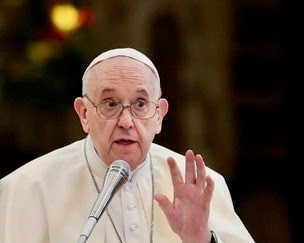
Given my dual status as journalist and preacher, I’d like to end with the recent words of one of the world’s current great spiritual leaders – Pope Francis. 


Just last week, he was honoring two long-time journalists who had covered the Vatican across several decades. Now, like all public figures, Pope Francis had faced harsh news coverage at time. Would that others might have this attitude:


“I also thank you for what you tell us about what goes wrong in the Church, for helping us not to sweep it under the carpet, and for the voice you have given to the victims of abuse: thank you for this.”


But his words I’d like to leave you with are about what he called our mission as journalists to work “so that the evil in the world may be healed.”  Our mission, he said, “is to explain the world, to make it less obscure, to make those who live in it less afraid of it and look at others with greater awareness, and also with more confidence.”


I am so honored and grateful to be part of a group this evening – and part of a roster of previous Hall of Famers – who have done the work of listening, investigating and reporting to make our communities better places for all.


Thank you so very much.


Sunday, October 31, 2021

Walking with God Toward Freedom


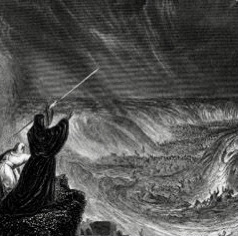
This story (Exodus 14: 19-31) of the Israelites fleeing to freedom through the parted waters of the Red Sea is one of the most familiar stories in our scriptures.


There are two big themes here.


God will rescue you and God will do in your enemies. 


These days, the idea that God will do in our enemies – pick your favorite enemy because there are so many to choose from – can seem awfully attractive. And there are no shortage of stories in the early parts of the Bible of God smiting enemies. 


Here’s one of the fascinating things about the Bible. Over time, the way the Jewish people and then the early Christian community came to know God kept changing. 


Yes, in the early days of the Jewish people, they often looked to God not only to bring them to safety but also to do in their enemies.


This was a common theme among many ancient religions, but the Jewish people put an interesting twist on it. 


In most of the other religions, the gods brought destruction on those who threatened the powerful. In the Jewish stories, God is always on the side of the weak and the vulnerable. 


But then in the later books of the Bible, the Jewish and then the Christian understanding of how God used divine power shifted. 


When the leaders of the Jewish people were taken into exile in Babylon, their eventual freedom came not because God killed off their captors but because Cyrus, the king of Persia, came to respect the variety of religious traditions in the lands he ruled and let the Jewish exiles go back home to Jerusalem.  The people were rescued by tolerance, not by destruction.


You remember the story of Jonah? We know him best because he was swallowed by a whale, right?  But the essence of that story is that God wanted to Jonah to go to the city of Nineveh and encourage people to repent. Jonah wanted God to just do them in. 


Nothing doing, says God. You can help them be saved, he told the reluctant Jonah. And so there was this wild ride inside the whale. Salvation, not destruction.


And then there is Jesus. Remember, he talked about loving our enemies, which seems like a pretty hard concept. When Peter cut off the ear of one of the people coming to capture Jesus in the Garden of Gethsemane, Jesus healed the man’s ear. As he was dying on the cross, Jesus asked forgiveness for those who were executing him. 


The portrayal of God as the hit man had changed to the image of God as the source of love.


How we perceive God can matter in how we behave. 


If we think that God is there to get rid of our enemies, then it is way too easy for us to figure we can give God a hand and smite them if God seems too slowing in getting to it.


If we think that God is the source of love, then that can guide us in how we treat others – even those others we view as our enemies.


Let’s keep that in mind as we explore this story of the Israelites’ journey to freedom.


It’s a story that has lots of drama, of course. 


It’s a story that has particular resonance in the African-American community, where the journey from slavery to freedom sustained their hopes during the 250 years they were enslaved in this country and in the years afterwards as the struggle for equality continues.


It’s a story that I think can have resonance in our own lives as well, as we seek to go through the rough waters and threatening moments of each day. It’s a story that reminds us that God is with us in the midst of everything we experience, both good and bad.


For the people captured in Africa and then sold into slavery in this country and for their descendants born into slavery, the Jewish story of escaping from 400 years of slavery in Egypt continually offered hope. 


You may know a bit about Harriet Tubman, the woman who led some 300 slaves to freedom through what was called the Underground Railroad. This often involved walking through river water to hide their scent from the dogs their pursuers were using.  It was as if the waters were parting to lead them to freedom.


For us in Wisconsin, the Underground Railroad is very much a part of our history. There still is a place in Milton – near Janesville – that served as a stop on the Underground Railroad. There was a lot of action in the Racine and Milwaukee areas. 


Between 1842 and 1865, the Wisconsin Historical Society estimates that at least 100 formerly enslaved people found freedom on a journey that passed through Wisconsin.


And sometimes those fleeing slavery in the midst of great peril must have felt like the Israelites once they realized Pharaoh and his army were pursuing them. 


Just before the section from scripture we heard today, the Israelites complained to Moses, “What have you done to us, bringing us out of Egypt? It would have been better for us to serve the Egyptians than to die in the wilderness.”


Harriet Tubman is sometimes called the Moses of her people for her efforts to lead them to freedom against great odds. There were times she surely echoed the words of Moses to the frightened followers: “Do not be afraid, stand firm and see the deliverance the Lord will accomplish for you today.”


There’s another parallel here for the African Americans as the Civil War ended and they rejoiced in their new-found freedom. In the story from Exodus, after Pharaoh freed the Israelite slaves, he had second thoughts and began to pursue them, which took us up to the point of today’s reading. 


The same thing happened to the former enslaved people in our country in the century after the Civil War. The joy of freedom gave way to economic exploitation, segregation, lynchings. And while the Civil Rights movement of the 1950s and 1960s knocked down many of the legal barriers to freedom, we are still struggling with the deep aftereffects of slavery in our nation.


The Exodus story touches lives in so many ways. I did not grow up in slavery nor have I faced the kind of discrimination and discouragement so many African Americans have faced. Yet I know there are times I feel as though I am facing a wall of water and that I am being pursued by an army of adversities that I could not outrun.


I’ll bet there are other folks here who have felt the same way, that maybe still feel the same way. There’s the disruption of illness, the grief of death, the worry about work and income, the anguish of divided families, the despair that has grown with political polarization.


Whatever army of misfortune is chasing me and you, I think there are glimmers of hope for us within this story of the Exodus. 

Think of the power of water in this story and in our life as followers of Jesus.


We sang at the beginning of our service today about the power of water in the hymn “Crashing Waters at Creation.” We sang how:


Parting water, stood and trembled

As the captives pass on the through

Washing off the chains of bondage

Channel to a life made new


In our baptisms, we had an image of water taking us through a channel from an old life into a new life.


When Jesus met the woman at the well, he offered her the water of new life.


Think of the water of the Red Sea as God’s grace surrounding people seeking a new life, closing on the old life they were leaving behind.


And remember in this story – which of course portrays God as performing a miracle to rescue a people fleeing and oppression and seeking freedom – that God did not act alone. It was only after Moses stretched his arms out over the sea  that the waters parted. 


After the waters parted, after the Israelites were on the other side, their journey was not over. They had years of wandering in the wilderness ahead. That can seem pretty discouraging – to them and to us. 


Yet they were not traveling alone. God was traveling with them – and with us. Sometimes they felt that God had abandoned them, but then they remembered the escape through the waters of the Red Sea, they recalled the song of Moses and his sister Miriam that “the Lord is my strength and my might and he has become my salvation.” 


They pushed on through the wilderness, much as we have to do in the midst of whatever obstacles we are facing. They pushed on trusting that God would be there with them.


I’d invite you to think with me for a moment about the ways we can act like Moses. I’m not sure we can part a vast body of water. But are there places where we can stretch out our arms and embrace someone who feels trapped by their circumstances? 


Are there places where we can stretch out our arms and widen the places where people who disagree can find common ground? 


Are there places where we can stretch out our arms and lead people through the hard moments in their lives so they know they are not alone?

And then can we let others do that for us? 

Can we accept the love and care others can offer us in our own hard times? 

Can we let them open the way for God’s grace to bubble up in our lives?


None of us may be at the level of a Moses or a Harriet Tubman, but each of us can be part of that vast gathering of people who follow Jesus, who share the water of abundant life, who try to heal the divisions in our world and who finally get to the next piece of solid ground.


We know the journey goes on, whether through the waters or in the wilderness, but we also know we do not have to be alone on that journey.


For me, the power of the story of the escape to freedom through the Red Sea is precisely that. We do not get to freedom in our lives alone. We get there together and with God’s help. That is true for us as individuals and it is true for us as a nation still trying to overcome the divisions among us and the things that keep people trapped in systems that exploit them.


We’re about to sing the hymn “When God Delivered Israel.” Notice when we get to the third verse, we will sing:

O God, restore our nation, 

come irrigate dry souls

That those who sow in sadness 

may reap their sheaves with gladness


May we join in that irrigation of dry souls so that all may reap with gladness. Amen

Sunday, October 3, 2021

Creation, Relationships and Us


Genesis 2: 18-24Mark 10: 2-16

Oct. 3, 2021 at Mt. Vernon Zwingli UCC


Those two scripture readings we just heard are such a mixed blessing. 

They offer hope – God made people to be together – and they get misused to create gender hierarchies – God made man first, so us guys get to rule.


They offer hope – Jesus equalizes the status of men and women in marriage – and they offer harshness – don’t you dare get divorced.


And they conclude with gentleness – Jesus holds and blesses the children.


There’s an awful lot to work with there. So let’s start at the beginning - with the creation story.


We all know the basics of the creation story that is told in the book of Genesis. It’s easy to forget that there are actually two creation stories told in the first two chapters. The people who put together the book of Genesis drew on the various stories that the Jewish people told about how the world – and humanity – came to be.

The one we heard today is from Chapter 2. 


In Chapter 1, God said “Let us (note the use of the plural – us) make humankind in ourimage, according to our likeness…male and female he created them.” God blesses them and tells them the whole world is theirs and they should tend to it.


In Chapter 2, before the reading we heard today, God gets a little earthier. God forms the first human out of dust of the ground and breathes life into that first person. 


Our story today picks after that first person – Adam, which literally means “the human” – is now living in this beautiful garden but beauty is not enough. Adam is lonely. So God took this first human and formed another one – the person we call Eve, which means “to breathe” or “to live.”


If I had a chance to ask Adam and Eve how they met – you know, was it on eHarmony, in a book group, at a bar - I imagine their response might be “well, God set us up.” Because for those first humans in this story, there really were no other choices. They had to learn to navigate the world – and their relationship to one another – without any role models. So there were stumbles along the way. But that’s not what we are focusing on today.


What sometimes happens with this story is that it is interpreted to create some really restrictive views of humanity.


God created Adam first – yay men! 

But did not God make two people of out of one? 

Are they not both fully human, both made in God’s image and likeness?

And yes, Chapter 1 says “male and female he created them,” but if God is described in plural terms and we are made in God’s image and likeness, then do we not include the full spectrum of masculinity and
 femininity that make up the complexity of who we are, a complexity that is not always easily defined?


Can you see how our understanding of this story really informs a lot of the debates we have in our time about sexuality and gender? 

I choose this broader understanding, recognizing that God said the humans in God’s image and likeness were “very good.” But I recognize that within our world today’s others take a more traditional reading and so our conversations need to continue.

At the end of the portion of Chapter 2 we just heard, the author says, 
“a man leaves his father and his mother and clings to his wife, and they become one flesh.” This frames the ideal for marriage and Jesus hearkens back to those words in the Gospel reading for today.


For us living in 2021, where we know the fragility of marriage and the heartache of divorce, these words of Jesus can sound awfully harsh. But let’s back up a bit to the context Jesus was in, to the traditions he was addressing, to the style of his teaching.


First, the Pharisees were not just asking a philosophical question. They were trying to trap Jesus. 


Just a few chapters earlier in the Gospel according to Mark, we heard the story of John the Baptist being executed by King Herod because John had challenged Herod’s marrying the woman who had been his brother’s wife. Herod was now on the lookout for Jesus, because some people were saying that Jesus was really John the Baptist raised from the dead.


So you can see that the simple question from the Pharisees – “Is it lawful for a man to divorce his wife?” – did not have a simple answer. If Jesus says yes, he has to takes side in debates over Jewish law. If he says no, he puts a target on himself for Herod.


That’s why, as he often does, he answers a question with a question: “What did Moses command you?” Now the burden is back on the Pharisees.


They give the culturally appropriate answer – a man could divorce his wife. 

A man could divorce his wife. Not the other way around. And once the divorce took effect, the woman was left on her own, facing societal rejection and economic poverty. 


And there were debates within Judaism about why a man could divorce his wife. Was it because she had been unfaithful? Or was it because he had simply found someone who might please him more – who made a better meal or was a better sex partner?


In tightening the rules, Jesus is protecting women. 

But in our time, these words of Jesus – “what God has joined together, let no one separate” – have often been turned into a trap for women in abusive marriages. 


I was deeply involved for several years in working with churches to make clear that when staying married threatened a woman’s health, even her life, using these words of Jesus as a cudgel to keep her from leaving was totally at odds with so much else of what Jesus said about caring for each other. 


He was addressing the mistreatment of women under the Jewish law of his time. Surely Jesus would also address the mistreatment of women in our time as domestic violence has become clearer as an issue that needs our attention.


But we know that marriages come apart for reasons other than domestic violence as couples find their lives changing over time. 


Here’s how I hear what Jesus was saying, both in his citation of the story from Genesis and his proclamation that what God has joined together, we should not tear apart.


I think that God had a vision of a world where human relationships reflected the love of that divine being we describe as a Trinity – a being where the a dance of divine love has these three manifestations of God swirling around as creation emanates from their love and their energy.


That’s the love God hopes for in our world. That’s the ideal.


Our Jewish ancestors knew they fell short of that ideal. It did not take long for those first humans to find their relationship fraying over who to blame for their shortcomings – you know, that apple that looked so tasty. Then one of their children killed his brother. And on it goes – imperfect human beings who still find their way back to God – and God always there offering redemption.


Yes, marriages in our time start out with that dance of love. Many of us know that sometimes we make missteps as the dance goes on but we find ways to recover. But sometimes, the missteps are too big, that dance of loses the rhythm of the music of love and we drift apart. 

There can be anger, there can be sadness, there can be confusion. No, this is not what God envisioned. But neither did God envision unhappiness for those humans made in the divine image and likeness. 


Jesus’ words about divorce seem pretty clear cut. But remember, Jesus’ style of teaching often reached for the extremes. If your eye is a source of sin, pluck it  out. If your hand is a source of sin, cut it off. He is making a point, not trying to create more business for hospital emergency rooms.

Enter the children. It is such a fine way to take this whole issue to another place.


Jesus’ followers want to keep the kids away. After all, children had even less value in their culture than women did. But Jesus says let them come to me – “it is to such as these that the kingdom of God belongs.”


Become like children, he tells his followers. Again, he is not saying jump into a time machine and reverse your aging process. He is saying look at the value each human has, even those you think are not worth much.


Then by his action, Jesus shows us what we might do with those we might be inclined to reject, those we think do not have as much worth as us, those who don’t fit the models of respectability or power or status.


He took them in his arms, laid his hands on them and blessed them.


That’s the Jesus who holds out high ideals, who sees God’s image in each of us and who walks with us through the good times and bad.


May we take this gift of God’s creation – our full humanity – may we find love in the relationships that connect us to each other and may we then reach out and bless those around us by living out God’s love and grace.


Amen.